Canadian Gold Maple Leaf Coins: Purity, Sizes and Security
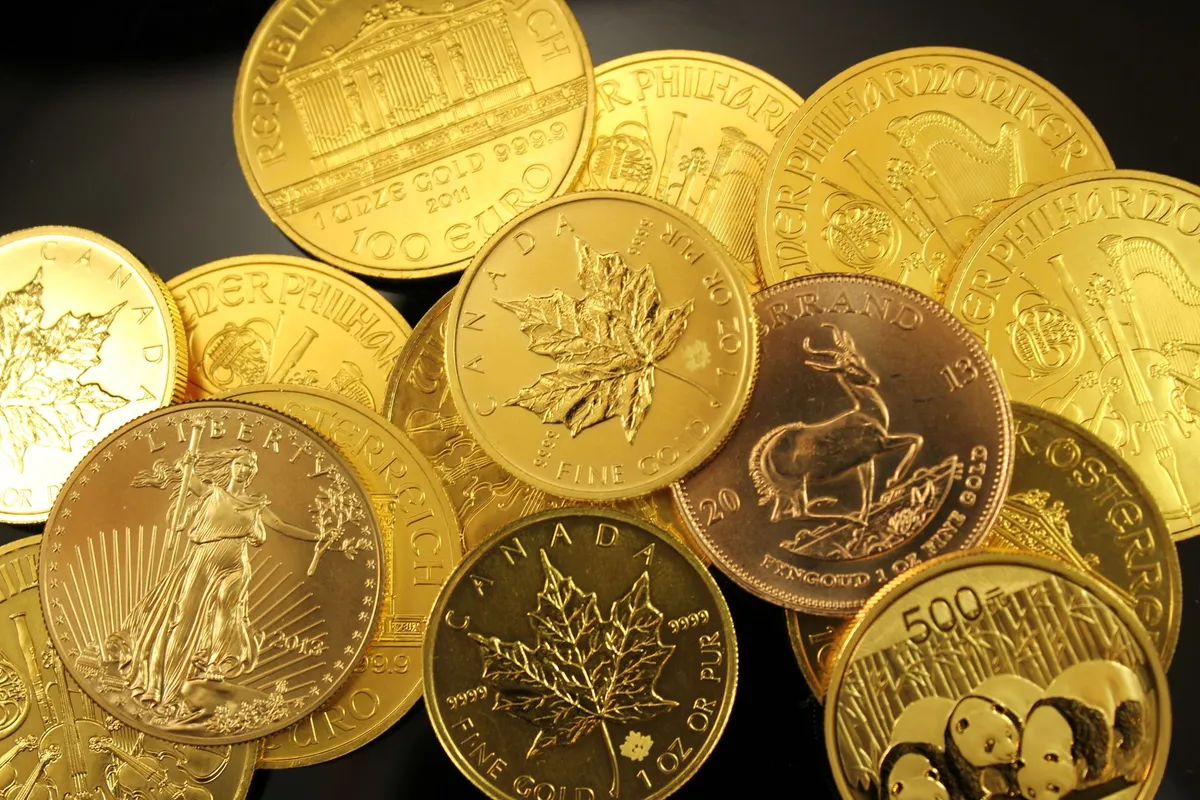
The Gold Maple Leaf is Canada’s flagship bullion coin and one of the most recognized gold coins on the market. Issued by the Royal Canadian Mint since 1979, it arrived as the first serious challenger to the South African Krugerrand and set a new standard of purity that many other mints later followed. Its simple design — a single sugar maple leaf on one side, the reigning monarch on the other — makes it easy to identify anywhere.
A coin born to compete
When the Maple Leaf was launched in 1979, the Krugerrand dominated the gold coin market. Canada, a major gold producer with a respected national mint, saw an opportunity to offer an alternative backed by a stable Western government. The timing proved favorable: as the Krugerrand faced import restrictions in several countries during the 1980s, the Maple Leaf gained a large share of the North American and European markets.
The coin is legal tender in Canada and carries a face value, guaranteed by the Government of Canada through its Crown corporation, the Royal Canadian Mint.
From .999 to .9999 fine
The very first Maple Leafs were struck in .999 fine gold. From 1982 the Mint raised the standard to .9999, often described as “four nines” gold, and it has used that purity for the regular bullion coin ever since. At the time, few bullion coins reached that level, and it became one of the Maple Leaf’s main selling points.
Because it is pure gold without alloy, the 1 oz Maple Leaf weighs exactly one troy ounce. The flip side is softness: 24-carat gold scratches and dents more easily than the 22-carat alloys used in the Krugerrand or the American Gold Eagle, so careful handling and storage in capsules or tubes is advisable.
The Mint has also produced special issues in even higher purity, at .99999, demonstrating its refining capability. These are collector or limited pieces rather than the standard bullion product.
Specifications and sizes
| Specification | 1 oz Gold Maple Leaf |
|---|---|
| Issuer | Royal Canadian Mint |
| First year | 1979 |
| Purity | .999 (1979–1982), .9999 thereafter |
| Fine gold content | 1 troy oz (31.10 g) |
| Face value | C$50 |
| Reverse | sugar maple leaf |
| Obverse | effigy of the reigning monarch |
Smaller sizes were added during the 1980s and later, giving a full range:
- 1 oz (C$50);
- 1/2 oz;
- 1/4 oz;
- 1/10 oz;
- 1/20 oz and some even smaller formats over the years.
Each fractional coin has its own face value, proportionally lower. As with other programs, the smallest sizes carry the highest premium per ounce of gold. The Mint has also issued multi-gram sets and occasional large-format coins, but the 1 oz coin remains the reference for investors.
Security features
Counterfeiters have targeted every well-known gold coin, and the Royal Canadian Mint has responded by adding visible and microscopic security features to the modern Maple Leaf. Without going into technical detail, the current coins include:
- Precision radial lines across the background on both sides, machined with a regularity that is difficult to reproduce and that gives the coin a distinctive shimmer;
- A small micro-engraved maple leaf mark on the reverse, applied by laser and visible under magnification;
- in more recent coins, additional Mint-developed technology designed to allow authentication of the mark.
These features do not change the coin’s gold content or its value as bullion, but they help dealers and owners verify authenticity quickly. Older Maple Leafs without these features remain genuine and tradable, though buyers may inspect them more closely or test them with scales, calipers and electronic testers.
How it compares with the Krugerrand and the Eagle
The three most traded 1 oz gold coins in North America are often compared side by side:
| Feature | Maple Leaf | Krugerrand | American Gold Eagle |
|---|---|---|---|
| Purity | .9999 (24 carat) | .9167 (22 carat) | .9167 (22 carat) |
| Total weight | 1 troy oz | about 33.93 g | about 33.93 g |
| Face value | C$50 | none | $50 |
| First year | 1979 | 1967 | 1986 |
| Durability | softer | harder | harder |
All three contain one troy ounce of fine gold and are valued mainly on that basis. Differences in price come from premiums, which vary with local supply and recognition. In Canada the Maple Leaf is the natural choice; in the United States the Eagle often commands a slightly higher premium; in Europe and elsewhere, the Krugerrand and Maple Leaf are both widely traded. See our dedicated pages on the Krugerrand and the American Eagle for more detail.
The wider Maple Leaf family
The maple leaf design has been extended to other metals. The Silver Maple Leaf, in .9999 fine silver, is one of the major Canadian silver coins, and the Royal Canadian Mint has also issued platinum and palladium Maple Leaf coins. Together they form one of the most complete bullion ranges offered by any national mint.
Key points
- The Gold Maple Leaf was launched by the Royal Canadian Mint in 1979.
- Its purity rose from .999 to .9999 in 1982, and the 1 oz coin weighs exactly one troy ounce.
- The 1 oz coin carries a C$50 face value, with a full set of fractional sizes.
- Modern coins include radial lines and a micro-engraved privy mark as security features.
- Being 24-carat, it is softer than 22-carat competitors and benefits from careful storage.
This article may contain partner links. They never influence what we write.