American Eagle Bullion Coins: Gold, Silver, Platinum, Palladium
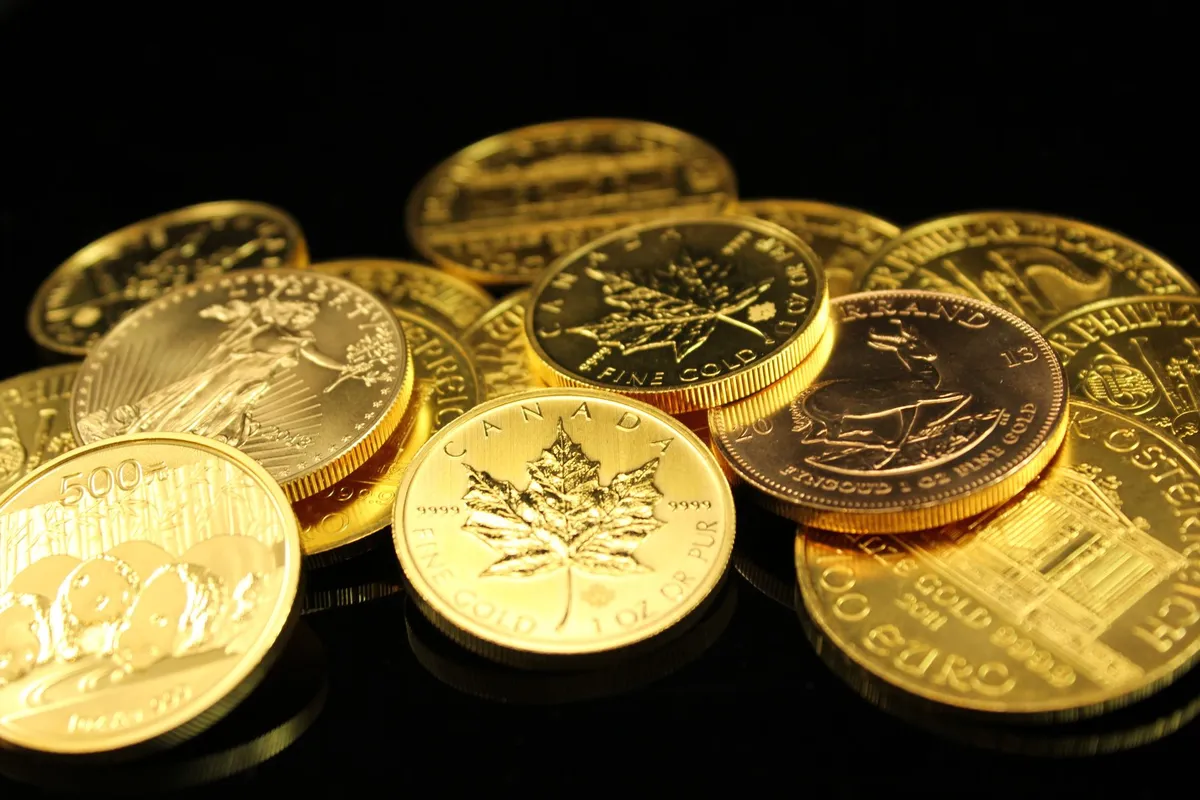
The American Eagle is the official bullion coin program of the United States, produced by the US Mint and guaranteed by the federal government for weight and purity. Launched in 1986 with gold and silver coins, the family later grew to include platinum and palladium. It has become one of the most traded bullion coin series in the world, and its silver coin in particular is a reference product for silver investors.
How the program started
Private ownership of gold bullion became legal again in the United States at the end of 1974. In the years that followed, American buyers mostly turned to foreign coins, above all the South African Krugerrand. When the Krugerrand was caught up in sanctions in the mid-1980s, Congress passed legislation in 1985 authorizing the Mint to strike domestic gold and silver bullion coins. The first American Gold Eagles and American Silver Eagles were released in 1986.
Unlike older US gold coins, the Eagles were never meant to circulate. Their face values are legal tender, but they are symbolic and far below the value of the metal they contain.
American Gold Eagle
The Gold Eagle follows the traditional formula of 22-carat gold, like the Krugerrand. The alloy includes silver and copper, and the 1 oz coin contains one full troy ounce of fine gold.
| Size | Fine gold | Face value |
|---|---|---|
| 1 oz | 1 troy oz | $50 |
| 1/2 oz | 1/2 troy oz | $25 |
| 1/4 oz | 1/4 troy oz | $10 |
| 1/10 oz | 1/10 troy oz | $5 |
The 1 oz coin weighs about 33.93 g in total because of the alloy. The coins are offered in bullion and proof versions, and over the years the Mint has also issued collector finishes.
For investors who prefer 24-carat gold, the US Mint has struck the American Gold Buffalo since 2006, in .9999 fine gold with a $50 face value for 1 oz. It is a separate program from the Eagle and is described in our overview of gold bullion coins.
American Silver Eagle
The Silver Eagle contains one troy ounce of .999 fine silver and carries a face value of $1. It has been struck every year since 1986 and is one of the best-selling silver bullion coins anywhere. Collectors also follow its proof and uncirculated versions, which come from different mint facilities and sometimes carry mint marks, while bullion coins are sold in large tubes and boxes.
| Specification | Silver Eagle |
|---|---|
| First year | 1986 |
| Fine silver content | 1 troy oz |
| Purity | .999 |
| Face value | $1 |
Silver Eagles are often the first coin people compare when looking at 1 oz silver coins, and their premiums are usually higher than those of some foreign silver coins, reflecting strong domestic demand.
Platinum and palladium Eagles
The American Platinum Eagle was introduced in 1997. The 1 oz coin has a $100 face value and is struck in high-purity platinum. Fractional sizes were produced in the early years, and the proof version has been notable for changing reverse designs that follow annual themes.
The American Palladium Eagle followed in 2017, with a 1 oz coin carrying a $25 face value. It borrows Adolph A. Weinman’s “Winged Liberty” portrait, best known from the dime of 1916–1945. For a wider look at this metal, see our page on palladium coins.
Both programs are smaller than the gold and silver ones, and their production has been less regular from year to year.
Designs
The Eagles deliberately draw on celebrated American coin designs of the early 20th century:
- Gold Eagle obverse: a full-length figure of Liberty holding a torch and olive branch, adapted from Augustus Saint-Gaudens’s design for the 1907–1933 $20 gold piece (see our page on the $20 gold coin).
- Silver Eagle obverse: Adolph A. Weinman’s Walking Liberty, originally used on the half dollar from 1916 to 1947.
- Reverses: the original Gold Eagle reverse showed a family of eagles at a nest; the original Silver Eagle reverse showed a heraldic eagle with shield.
In 2021 the Mint introduced new reverse designs for both the gold and silver coins, each featuring an eagle in a new composition, along with refinements to the obverse artwork. Coins from before and after the change are both readily traded, and the transition year attracted particular interest from collectors.
How Eagles reach buyers: the authorized purchasers system
The US Mint does not sell bullion Eagles directly to the general public. Instead it sells them in bulk to a limited number of authorized purchasers: large precious metals firms, wholesalers and financial institutions that meet the Mint’s financial and operational requirements. They buy coins at the metal value plus a fixed markup set by the Mint, then resell them to dealers and, through them, to the public.
Proof and collector versions are different: the Mint sells those directly to individuals, at prices it publishes and adjusts with the metal markets.
This structure explains why bullion Eagles always pass through dealers and why their availability can tighten when demand jumps suddenly: the Mint allocates production among authorized purchasers, and the supply chain can take time to catch up.
Key points
- American Eagles have been issued since 1986 in gold and silver, 1997 in platinum and 2017 in palladium.
- The Gold Eagle is 22-carat; the 1 oz coin holds a full troy ounce of gold and has a $50 face value.
- The Silver Eagle holds one troy ounce of .999 silver, with a $1 face value.
- Designs revive Saint-Gaudens’s Liberty and Weinman’s Walking Liberty; reverses were redesigned in 2021.
- Bullion coins are distributed through authorized purchasers, not sold by the Mint to individuals.
This article may contain partner links. They never influence what we write.