English Gold Coins: Sovereigns, Half Sovereigns and Britannias
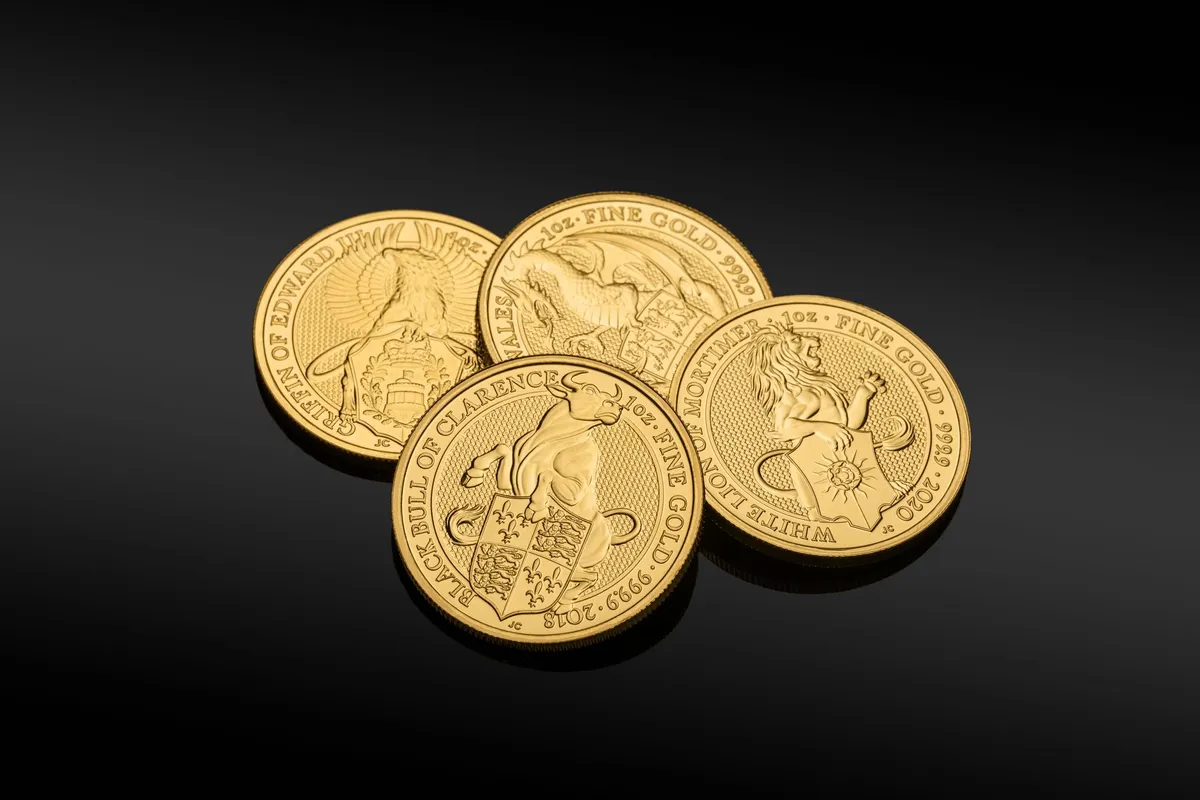
Britain has one of the longest traditions of gold coinage in the world, and two of its coins remain staples of the bullion market today: the sovereign and the gold Britannia. Both are struck by the Royal Mint, both are legal tender in the United Kingdom, and both are bought by investors far beyond British shores. Their history explains much about how they are valued now.
From the guinea to the sovereign
Before the modern sovereign, the best-known English gold coin was the guinea, first struck in the 1660s. Its name came from the Guinea coast of West Africa, the source of much of the gold used. Its value in silver shillings fluctuated with the gold price until it was fixed at 21 shillings in the early 18th century. The guinea’s legacy outlived the coin: for generations, professional fees, luxury goods and horse-racing prizes were still quoted in guineas, meaning one pound and one shilling.
Following the Napoleonic Wars, the British currency was reorganized and the guinea was replaced by a new gold coin worth exactly one pound. The modern sovereign was first struck in 1817, reviving the name of a Tudor gold coin, and it soon became the anchor of the gold standard and one of the most widely accepted coins in international trade.
The sovereign
The sovereign’s specification has stayed essentially the same for more than two centuries, which is part of its appeal.
| Specification | Sovereign | Half sovereign |
|---|---|---|
| Purity | 22 carat (.9167) | 22 carat (.9167) |
| Total weight | 7.98 g | about 3.99 g |
| Fine gold content | about 0.2354 troy oz | about 0.1177 troy oz |
| Face value | £1 | 50p |
| Reverse design | St George and the dragon | St George and the dragon (on most issues) |
The famous reverse, showing St George on horseback slaying the dragon, was engraved by the Italian artist Benedetto Pistrucci and first appeared on the 1817 coin. After a period when other designs were used, it returned to the sovereign in the later 19th century and has been the standard reverse ever since, with occasional commemorative variations. The obverse carries the portrait of the reigning monarch, which makes sovereigns a convenient way to trace British history coin by coin.
Sovereigns were struck not only in London but also at branch mints across the British Empire, including several in Australia, as well as in India, Canada and South Africa, identified by small mint marks. Production for circulation stopped around the time of the First World War, when gold disappeared from daily use. The Royal Mint later resumed striking sovereigns as bullion coins, and they have been produced in most years since 1957.
The half sovereign follows the same standard at half the weight. Larger and smaller multiples exist too, notably the double sovereign and the quintuple (five-pound) sovereign, though these are generally issued for collectors.
The gold Britannia
The Royal Mint launched the gold Britannia in 1987 as Britain’s answer to the Krugerrand, the Maple Leaf and the American Eagle — a coin containing one troy ounce of fine gold. Its reverse shows Britannia, the female personification of Britain, with trident and shield; the design has changed several times over the years, and the obverse carries the monarch’s portrait.
The Britannia’s purity is the main point to know:
- 1987–2012: 22 carat (.9167), so the 1 oz coin weighed more than an ounce in total;
- from 2013: .9999 fine gold, putting it on the same footing as the Maple Leaf or Philharmonic.
| Specification | Gold Britannia (1 oz) |
|---|---|
| Issuer | Royal Mint |
| First year | 1987 |
| Purity | 22 carat until 2012; .9999 from 2013 |
| Fine gold content | 1 troy oz |
| Face value | £100 |
Fractional sizes have also been issued. Recent Britannias include visible security features intended to make counterfeiting harder.
How sovereigns are valued
Because a sovereign contains a little under a quarter-ounce of gold, its melt value is easy to work out: multiply the gold price per troy ounce by 0.2354. Common-date sovereigns trade at a premium over that figure, generally higher in percentage terms than on a 1 oz coin because of the smaller size.
Some sovereigns are worth far more than their gold. Rare dates, scarce branch-mint issues, coins from short reigns and pieces in exceptional condition can command significant numismatic premiums. As with any old coin, cleaning or damage reduces collector value. If you are only seeking gold exposure, “bullion” or mixed-date sovereigns are the relevant category.
For a wider comparison with other national coins, see our guides to European gold coins and gold bullion coins.
UK tax treatment
Sovereigns and Britannias are legal tender in the United Kingdom. Under UK tax rules, gains made by individuals on disposals of UK legal-tender currency are exempt from capital gains tax, and this exemption has generally been understood to cover these coins. Investment gold coins are also exempt from VAT in the UK.
This is a general description only. Tax rules change and individual circumstances differ, so anyone relying on these points should check the current position for their own situation. Buyers outside the UK will be subject to their own local rules.
Before you buy
- Decide whether you want the divisibility of sovereigns or the lower per-ounce cost of 1 oz Britannias.
- Check the purity of older Britannias: pre-2013 coins are 22 carat.
- Treat rare-date sovereigns as collector purchases, priced on rarity and grade.
- Compare like with like across sellers; our page on how to buy gold coins explains what to look at.
This article may contain partner links. They never influence what we write.